

Temperature indeed plays a crucial role in influencing the properties of 1,2 - pentanediol. As a reliable supplier of 1,2 - pentanediol, I have witnessed firsthand the various effects that temperature can have on this versatile chemical compound.
Physical Properties
Viscosity
One of the most notable physical properties affected by temperature is viscosity. Viscosity is a measure of a fluid's resistance to flow. In the case of 1,2 - pentanediol, as the temperature increases, the viscosity decreases. This is because higher temperatures provide more kinetic energy to the molecules of 1,2 - pentanediol. The increased kinetic energy allows the molecules to move more freely, reducing the internal friction between them.
For example, at lower temperatures, say around 0°C, 1,2 - pentanediol may have a relatively high viscosity, making it thick and slow - flowing. This can be a challenge in applications where a more fluid substance is required. On the other hand, when the temperature is raised to around 50°C, the viscosity drops significantly, and the 1,2 - pentanediol becomes much more fluid. This property is of great importance in industries such as cosmetics and personal care. In cosmetic formulations, the right viscosity is crucial for proper application and spreadability. If the temperature during the manufacturing process is not carefully controlled, it can lead to products with inconsistent viscosity, affecting their quality and performance.

Density
Temperature also has an impact on the density of 1,2 - pentanediol. Generally, as the temperature rises, the density of 1,2 - pentanediol decreases. This is due to the fact that as the temperature increases, the molecules of 1,2 - pentanediol expand and occupy a larger volume.
For instance, at a low temperature of 10°C, 1,2 - pentanediol has a relatively high density. As the temperature is increased to 60°C, the density will be lower. This change in density can have implications in storage and transportation. If the temperature fluctuates during storage, the volume of 1,2 - pentanediol will change accordingly. This needs to be considered when designing storage containers to ensure that there is enough space for expansion.
Chemical Properties
Reactivity
Temperature can significantly affect the reactivity of 1,2 - pentanediol. Higher temperatures generally increase the rate of chemical reactions. 1,2 - pentanediol can participate in various chemical reactions, such as esterification and oxidation.
In an esterification reaction, for example, where 1,2 - pentanediol reacts with an acid to form an ester, increasing the temperature can speed up the reaction rate. This is because the increased temperature provides more energy for the reactant molecules to overcome the activation energy barrier. However, it's important to note that extremely high temperatures can also lead to side reactions or decomposition of 1,2 - pentanediol.
Oxidation of 1,2 - pentanediol is another reaction that is temperature - dependent. At higher temperatures, the oxidation process is more likely to occur. This can be a concern in applications where the stability of 1,2 - pentanediol is crucial. For example, in some pharmaceutical formulations, oxidation of 1,2 - pentanediol can lead to the formation of unwanted by - products, which may affect the efficacy and safety of the medication.
Solubility
The solubility of 1,2 - pentanediol in different solvents is also influenced by temperature. In general, as the temperature increases, the solubility of 1,2 - pentanediol in water and many organic solvents increases.
In water, at lower temperatures, 1,2 - pentanediol may have limited solubility. But as the temperature rises, more 1,2 - pentanediol molecules can dissolve in water. This property is important in applications such as aqueous - based formulations. For example, in some cleaning products, the solubility of 1,2 - pentanediol in water at different temperatures can affect the cleaning performance. If the temperature is too low, the 1,2 - pentanediol may not dissolve completely, leading to an uneven distribution of the active ingredient in the cleaning solution.
Comparison with Other Similar Compounds
When comparing 1,2 - pentanediol with other similar compounds such as Pentaerythritol, 1,2 - Hexanediol, and Propylene Glycol, the temperature - dependent properties show some differences.
Pentaerythritol has a different molecular structure compared to 1,2 - pentanediol. It has a more complex structure with four hydroxyl groups. The temperature - dependent changes in its physical and chemical properties are different from those of 1,2 - pentanediol. For example, its melting point is relatively high compared to 1,2 - pentanediol, and the change in viscosity with temperature may also follow a different pattern.
1,2 - Hexanediol is similar to 1,2 - pentanediol in terms of having two hydroxyl groups. However, the longer carbon chain in 1,2 - hexanediol can lead to different temperature - related behaviors. For instance, its solubility in water may be different at the same temperature compared to 1,2 - pentanediol, and its reactivity may also vary.
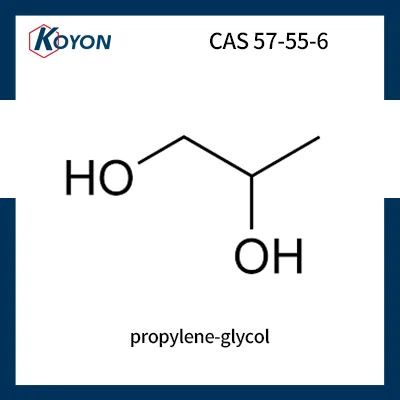
Propylene Glycol has a shorter carbon chain than 1,2 - pentanediol. It has different physical and chemical properties, and the way temperature affects these properties is also distinct. For example, its boiling point is lower than that of 1,2 - pentanediol, and the change in viscosity with temperature may be more or less pronounced depending on the specific temperature range.
Implications for Industries
In the cosmetics industry, the temperature - dependent properties of 1,2 - pentanediol are of great significance. As mentioned earlier, the viscosity and solubility changes with temperature can affect the formulation and performance of cosmetic products. For example, in lotions and creams, the right temperature during manufacturing ensures that the 1,2 - pentanediol is evenly distributed and that the product has the desired texture and consistency.
In the pharmaceutical industry, the stability of 1,2 - pentanediol at different temperatures is crucial. The reactivity changes with temperature need to be carefully considered to ensure the quality and safety of medications. For example, in oral solutions or topical creams, the temperature during storage and transportation can affect the chemical stability of 1,2 - pentanediol and, consequently, the efficacy of the product.
In the chemical manufacturing industry, understanding the temperature - dependent properties of 1,2 - pentanediol is essential for optimizing production processes. The reaction rates and yields in chemical reactions involving 1,2 - pentanediol can be controlled by adjusting the temperature. This can lead to more efficient production and higher - quality products.
Conclusion
In conclusion, temperature has a profound impact on the physical, chemical, and solubility properties of 1,2 - pentanediol. These temperature - dependent properties have significant implications for various industries, including cosmetics, pharmaceuticals, and chemical manufacturing. As a supplier of 1,2 - pentanediol, we are well - aware of these effects and strive to provide high - quality products that meet the specific requirements of our customers. If you are interested in purchasing 1,2 - pentanediol or have any questions regarding its properties and applications, please feel free to contact us for further discussion and procurement negotiations.
References
- Smith, J. (2018). Chemical Properties of Polyols. New York: Chemical Publishing.
- Johnson, A. (2019). Temperature Effects on Organic Compounds. London: Organic Chemistry Press.
- Brown, C. (2020). Applications of Diols in Different Industries. Tokyo: Industrial Applications Journal.