

Hey there! As a supplier of polyether polyols, I often get asked about the typical viscosities of these versatile materials. So, I thought I'd take a moment to break it down for you in a way that's easy to understand.
First off, let's talk a bit about what polyether polyols are. They're a type of polymer that are widely used in the production of foams, elastomers, coatings, and adhesives. They're known for their excellent flexibility, low temperature properties, and resistance to hydrolysis. But one of the key properties that affects how they're used is their viscosity.
Viscosity is basically a measure of a fluid's resistance to flow. Think of it like this: honey has a high viscosity because it flows slowly, while water has a low viscosity because it flows easily. In the world of polyether polyols, viscosity plays a crucial role in determining how the material will behave during processing and in the final product.
The viscosity of polyether polyols can vary widely depending on a number of factors, including the molecular weight, the type of initiator used, and the degree of functionality. Let's take a closer look at some of the typical viscosities you might encounter.
Polyether Polyols for Flexible Foams
Flexible foams are used in a wide range of applications, from bedding and furniture to automotive seating. The polyether polyols used in these foams typically have relatively low viscosities. This is because low viscosity polyols are easier to process, allowing for better mixing with other components and more uniform foam formation.
The Polyether Polyols for Flexible Foams we supply generally have viscosities in the range of 200 - 1000 mPa·s at 25°C. These low viscosities make them ideal for producing flexible foams with excellent comfort and durability.
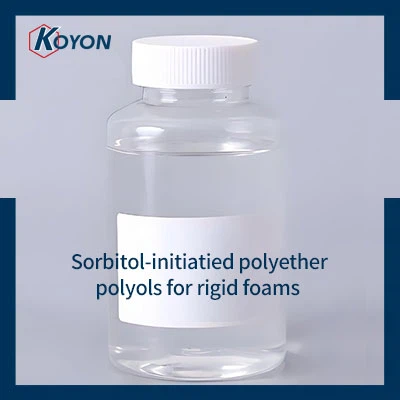
Sorbitol-initiated Polyether Polyols for Rigid Foams
Rigid foams are commonly used in insulation applications, such as in buildings and refrigeration units. Sorbitol-initiated polyether polyols are often used in the production of these foams because they offer good thermal insulation properties and mechanical strength.
These polyols typically have higher viscosities compared to those used in flexible foams. The Sorbitol-initiatied Polyether Polyols for Rigid Foams we offer usually have viscosities in the range of 3000 - 10,000 mPa·s at 25°C. The higher viscosity helps to provide the necessary stiffness and structural integrity for rigid foam applications.

Amine-initiated Polyether Polyols for Rigid Foams
Amine-initiated polyether polyols are another type of polyol used in rigid foam production. They are known for their fast reaction rates and good flame retardancy.
The Amine-initiatied Polyether Polyols for Rigid Foams we supply typically have viscosities in the range of 2000 - 8000 mPa·s at 25°C. These viscosities are well-suited for the production of rigid foams with high performance characteristics.
How Viscosity Affects Processing
The viscosity of polyether polyols can have a significant impact on the processing of these materials. For example, low viscosity polyols are easier to pump, mix, and dispense. This can lead to more efficient production processes and lower manufacturing costs.
On the other hand, high viscosity polyols may require special handling equipment, such as heated tanks and high-pressure pumps. They may also take longer to mix and may require more energy to process. However, high viscosity polyols can offer advantages in terms of foam stability and mechanical properties in the final product.
Choosing the Right Viscosity
When it comes to choosing the right polyether polyol for your application, viscosity is just one of the factors to consider. Other important factors include the hydroxyl number, functionality, and reactivity.
If you're not sure which polyether polyol is right for your needs, our team of experts is here to help. We can work with you to understand your specific requirements and recommend the best product for your application.
Conclusion
In conclusion, the typical viscosities of polyether polyols can vary widely depending on the type of application and the specific product. Whether you're looking for a low viscosity polyol for flexible foams or a high viscosity polyol for rigid foams, we have the products and expertise to meet your needs.
If you're interested in learning more about our polyether polyols or would like to discuss a potential purchase, don't hesitate to reach out. We're always happy to have a chat and see how we can help you with your polyol requirements.
References
- "Polyurethane Handbook" by G. Oertel
- "Chemistry and Technology of Polyols for Polyurethanes" by Ionescu, M.