

In the world of chemical analysis, Infrared (IR) spectroscopy is like a detective's magnifying glass. It helps us peer into the molecular structure of substances and figure out what they're made of. As an anhydrides supplier, I've seen firsthand how crucial it is to accurately identify different types of anhydrides. So, let's dive into how IR spectroscopy can be used to do just that.

First off, what are anhydrides? Anhydrides are organic compounds that contain a carbonyl group (C=O) bonded to an oxygen atom, which is in turn bonded to another carbonyl group. They're widely used in various industries, from plastics and resins to pharmaceuticals and agrochemicals. Some common types of anhydrides we supply include Maleic Anhydride, Pyromellitic Dianhydride, and Phthalic Anhydride.
Now, let's talk about how IR spectroscopy works. When infrared light is passed through a sample, the molecules in the sample absorb certain wavelengths of the light. These absorptions occur because the infrared light causes the bonds in the molecules to vibrate. Different types of bonds vibrate at different frequencies, which means they absorb different wavelengths of infrared light. By measuring the wavelengths of light that are absorbed by the sample, we can create an IR spectrum, which is like a fingerprint for the molecule.
One of the key features of an anhydride's IR spectrum is the presence of two strong carbonyl (C=O) stretching bands. These bands typically appear in the range of 1850 - 1750 cm⁻¹. The reason for the two bands is due to the asymmetric and symmetric stretching vibrations of the two carbonyl groups in the anhydride. The asymmetric stretching vibration usually occurs at a higher frequency (around 1850 - 1800 cm⁻¹), while the symmetric stretching vibration occurs at a lower frequency (around 1800 - 1750 cm⁻¹).
Let's take Maleic Anhydride as an example. In its IR spectrum, you'll see these characteristic carbonyl stretching bands. Additionally, Maleic Anhydride has a double bond (C=C) in its structure. The C=C stretching vibration shows up as a weak absorption band around 1650 cm⁻¹. The presence of this band can help us confirm the identity of Maleic Anhydride, especially when combined with the carbonyl bands.
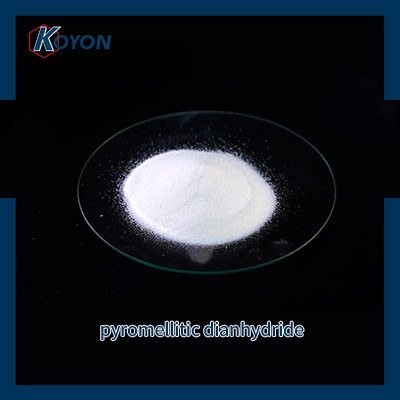
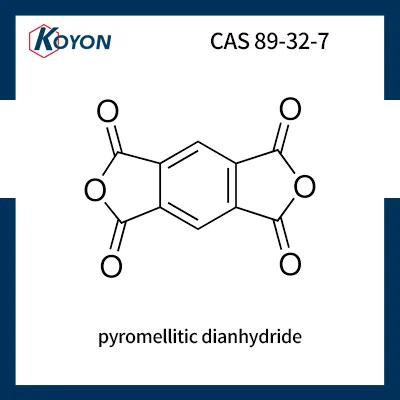
Pyromellitic Dianhydride is a bit more complex. It has four carbonyl groups in its structure, which means the carbonyl stretching bands in its IR spectrum can be more intense and may show some splitting due to the interaction between the carbonyl groups. The aromatic rings in Pyromellitic Dianhydride also contribute to the IR spectrum. The C-H stretching vibrations of the aromatic rings appear in the range of 3100 - 3000 cm⁻¹, and the C=C stretching vibrations of the aromatic rings show up around 1600 - 1500 cm⁻¹.
Phthalic Anhydride also has characteristic features in its IR spectrum. Like the other anhydrides, it has the two carbonyl stretching bands in the 1850 - 1750 cm⁻¹ range. The presence of the aromatic ring in Phthalic Anhydride leads to absorptions similar to those in Pyromellitic Dianhydride, such as the C-H and C=C stretching vibrations of the aromatic ring.
Another important aspect of using IR spectroscopy to identify anhydrides is the ability to distinguish between cyclic and acyclic anhydrides. Cyclic anhydrides, like the ones we've been discussing, have a more rigid structure compared to acyclic anhydrides. This rigidity affects the frequencies of the carbonyl stretching vibrations. In general, cyclic anhydrides have higher carbonyl stretching frequencies than acyclic anhydrides.
In addition to the carbonyl and other characteristic bands, the IR spectrum can also provide information about impurities in the anhydride sample. For example, if there are traces of water in the sample, we'll see a broad absorption band around 3300 - 3500 cm⁻¹ due to the O-H stretching vibration of water. This can be important because water can react with anhydrides and affect their quality and performance.
So, how do we actually use IR spectroscopy to identify anhydrides in a practical setting? First, we need to prepare the sample. This usually involves dissolving the anhydride in a suitable solvent or making a thin film of the sample. Then, we place the sample in the IR spectrometer and record the spectrum. Once we have the spectrum, we compare it to reference spectra of known anhydrides. There are many databases available that contain IR spectra of various chemical compounds, including anhydrides. By matching the absorption bands in our sample spectrum with those in the reference spectra, we can identify the anhydride.
It's also important to note that IR spectroscopy is not the only technique used to identify anhydrides. It's often used in combination with other analytical methods, such as nuclear magnetic resonance (NMR) spectroscopy and mass spectrometry. These techniques can provide complementary information about the molecular structure of the anhydride, which can help us make a more accurate identification.
As an anhydrides supplier, we rely on accurate identification methods like IR spectroscopy to ensure the quality of our products. We want to make sure that what we're supplying to our customers is exactly what they need. Whether it's Maleic Anhydride for the production of unsaturated polyester resins or Phthalic Anhydride for the manufacturing of plasticizers, we need to be certain of the identity and purity of our anhydrides.
If you're in the market for high - quality anhydrides and want to learn more about our products, feel free to reach out for a procurement discussion. We're always happy to talk about how our anhydrides can meet your specific needs.

References
- Silverstein, R. M., Webster, F. X., & Kiemle, D. J. (2014). Spectrometric Identification of Organic Compounds. Wiley.
- Pavia, D. L., Lampman, G. M., Kriz, G. S., & Vyvyan, J. R. (2015). Introduction to Spectroscopy: A Guide for Students of Organic Chemistry. Cengage Learning.