

In the realm of concrete applications, the choice of additives can significantly influence the performance, durability, and workability of the final product. Two commonly used additives are calcium formate and calcium chloride. As a calcium formate supplier, I am well - versed in the characteristics of these two substances and their impacts on concrete. This blog post aims to provide a comprehensive comparison between calcium formate and calcium chloride in concrete applications.

1. Chemical Properties
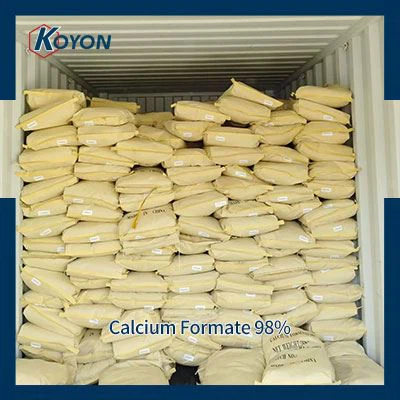
Calcium formate has the chemical formula Ca(HCOO)₂. It is a white crystalline powder that is highly soluble in water. When dissolved, it dissociates into calcium ions (Ca²⁺) and formate ions (HCOO⁻). The formate ions have a relatively stable chemical structure and can participate in various chemical reactions within the concrete matrix.
On the other hand, calcium chloride has the formula CaCl₂. It is also a white crystalline solid, but it is more hygroscopic compared to calcium formate. When exposed to air, calcium chloride can absorb moisture rapidly, which can be both an advantage and a drawback in concrete applications. In water, it dissociates into calcium ions (Ca²⁺) and chloride ions (Cl⁻).
2. Setting and Hardening Acceleration
One of the primary functions of additives in concrete is to accelerate the setting and hardening process. Calcium chloride is a well - known accelerator. The chloride ions in calcium chloride react with the tricalcium aluminate (C₃A) in cement to form calcium chloroaluminates. This reaction speeds up the early hydration of cement, leading to a faster setting time and higher early - age strength development.
Calcium formate also acts as an accelerator. The formate ions can react with the calcium hydroxide produced during cement hydration. This reaction promotes the formation of calcium carbonate and other hydration products, which in turn accelerates the setting and hardening of concrete. Although the acceleration mechanism of calcium formate is different from that of calcium chloride, it can achieve comparable early - age strength development in concrete.
However, it should be noted that the use of calcium chloride may cause some problems. The chloride ions can corrode the steel reinforcement in concrete, especially in the presence of moisture and oxygen. This corrosion can lead to cracking and spalling of the concrete, reducing the long - term durability of the structure. In contrast, calcium formate does not cause corrosion of steel reinforcement, making it a more suitable choice for reinforced concrete structures.
3. Workability
Workability is an important property of concrete, which refers to the ease of mixing, placing, and compacting the concrete. Calcium chloride can improve the workability of concrete to some extent. The hygroscopic nature of calcium chloride helps to retain moisture in the concrete, preventing it from drying out too quickly. This can make the concrete more fluid and easier to handle.
Calcium formate also has a positive effect on workability. It can reduce the water demand of concrete while maintaining a similar slump. This means that less water is needed to achieve the same level of workability, which can lead to higher strength and better durability of the concrete. Moreover, calcium formate can improve the cohesion of the concrete mixture, reducing the segregation and bleeding of the concrete.
4. Frost Resistance
In cold climates, the frost resistance of concrete is crucial. Calcium chloride can enhance the frost resistance of concrete to a certain degree. By accelerating the setting and hardening process, it allows the concrete to reach a higher strength before the onset of freezing temperatures. However, the presence of chloride ions can also increase the risk of salt scaling on the surface of the concrete when it is exposed to freeze - thaw cycles.
Calcium formate can significantly improve the frost resistance of concrete. It promotes the formation of a dense and uniform microstructure in the concrete, which reduces the permeability of the concrete to water and other aggressive substances. This dense microstructure can better withstand the expansion and contraction forces caused by freeze - thaw cycles, preventing the damage to the concrete.
5. Compressive Strength
Both calcium formate and calcium chloride can increase the compressive strength of concrete. Calcium chloride is effective in increasing the early - age compressive strength, as mentioned earlier. It can double or even triple the early - age strength of concrete within the first few days.
Calcium formate not only increases the early - age strength but also has a positive impact on the long - term strength development of concrete. The formate ions can continuously participate in the hydration reactions of cement, promoting the growth of hydration products and improving the overall strength of the concrete. Studies have shown that concrete with calcium formate can achieve higher 28 - day and long - term compressive strengths compared to concrete without additives or with calcium chloride in some cases.
6. Environmental Impact
From an environmental perspective, calcium chloride has some drawbacks. The chloride ions can leach into the soil and groundwater, causing pollution. In addition, the production of calcium chloride may involve energy - intensive processes and the use of some hazardous chemicals.
Calcium formate is a more environmentally friendly option. It is biodegradable and non - toxic. The production of calcium formate is relatively clean, and it does not release harmful substances into the environment during use.
7. Cost - Effectiveness
The cost - effectiveness of additives is an important consideration for concrete producers. Calcium chloride is generally cheaper than calcium formate. However, when considering the long - term costs associated with maintenance, repair, and replacement due to corrosion and other durability issues caused by calcium chloride, calcium formate may be a more cost - effective choice in the long run.
8. Applications in Different Types of Concrete
- Reinforced Concrete: As mentioned earlier, due to the risk of corrosion, calcium chloride is not suitable for reinforced concrete. Calcium formate is the preferred additive for reinforced concrete structures, as it can provide the necessary acceleration of setting and hardening without endangering the steel reinforcement.
- Cold - Weather Concrete: In cold - weather concreting, both calcium formate and calcium chloride can be used as accelerators. However, considering the frost resistance and long - term durability, calcium formate is a better option, especially for structures that need to withstand harsh environmental conditions.
- High - Performance Concrete: High - performance concrete requires excellent workability, strength, and durability. Calcium formate can meet these requirements by improving the workability, increasing the strength, and enhancing the durability of the concrete. It is a more suitable additive for high - performance concrete compared to calcium chloride.
9. Product Grades
If you are interested in using calcium formate in your concrete applications, we offer two main grades: Feed Grade Calcium Formate and Industrial Grade Calcium Formate. The industrial grade is specifically designed for concrete and other industrial applications, with high purity and excellent performance.
Conclusion
In conclusion, while calcium chloride has been widely used as an additive in concrete for its acceleration properties, calcium formate offers several advantages in terms of durability, environmental friendliness, and long - term cost - effectiveness. It does not cause corrosion of steel reinforcement, improves frost resistance, and enhances the overall performance of concrete. As a calcium formate supplier, I highly recommend the use of calcium formate in concrete applications, especially for reinforced concrete, cold - weather concreting, and high - performance concrete.
If you are interested in purchasing calcium formate for your concrete projects, please feel free to contact us for more information and to discuss your specific requirements. We are committed to providing high - quality products and excellent customer service.
References
- Neville, A. M. (1995). Properties of Concrete. Pearson Education.
- Mehta, P. K., & Monteiro, P. J. M. (2014). Concrete: Microstructure, Properties, and Materials. McGraw - Hill Education.
- Mindess, S., Young, J. F., & Darwin, D. (2003). Concrete. Prentice Hall.