

What are the photochemical reactions of anhydrides?
Hey there! As an anhydrides supplier, I'm super stoked to dive into the fascinating world of the photochemical reactions of anhydrides with you. Anhydrides are pretty cool compounds, and their photochemical reactions are not just some boring science stuff but have a ton of real - world applications.

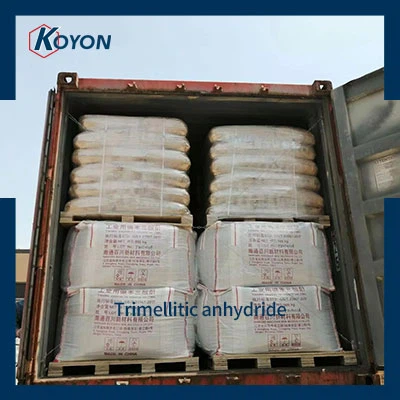
First off, let's get a quick refresher on what anhydrides are. Anhydrides are basically compounds that are formed by removing water from an acid, or in some cases, they can be thought of as the condensation products of two acid molecules. They come in different shapes and sizes, like Trimellitic Anhydride, Phthalic Anhydride, and Pyromellitic Dianhydride.
Now, onto the main event - photochemical reactions. Photochemical reactions are reactions that are initiated by the absorption of light. When anhydrides are exposed to light, some really interesting things can happen.
One of the common photochemical reactions of anhydrides is photolysis. In photolysis, the anhydride molecule absorbs a photon of light, and this energy causes the molecule to break apart. For example, some cyclic anhydrides can undergo ring - opening photolysis. When light hits the cyclic anhydride, the energy is sufficient to break one of the carbon - oxygen bonds in the ring structure. This leads to the formation of reactive intermediates, which can then go on to react with other molecules in the system.
Let's take phthalic anhydride as an example. When phthalic anhydride absorbs ultraviolet (UV) light, it can break open its cyclic structure. The resulting open - chain intermediate is highly reactive. It might react with water in the environment, if present, to form the corresponding dicarboxylic acid. This reaction is not only important in a chemical laboratory setting but also has implications in environmental chemistry. In the atmosphere, phthalic anhydride and other similar anhydrides can be exposed to sunlight, and their photochemical reactions can contribute to the formation of secondary organic aerosols, which play a role in air quality and climate change.
Another interesting photochemical reaction of anhydrides is photo - induced addition reactions. Some anhydrides can react with other molecules in the presence of light to form new compounds. For instance, an anhydride might react with an alkene under the influence of light. The light provides the energy needed to activate the anhydride and the alkene, allowing them to interact. The reaction usually proceeds through a free - radical mechanism. The anhydride first absorbs light and forms a free - radical intermediate. This free - radical then attacks the alkene, leading to the addition of the anhydride moiety to the alkene. This type of reaction is useful in organic synthesis. Chemists can use these photo - induced addition reactions to create new and complex molecules that have various applications, such as in the development of new drugs or high - performance materials.
Pyromellitic dianhydride is a key compound in the field of polymers. When it comes to its photochemical reactions, it can participate in photo - crosslinking reactions. In a polymer system containing pyromellitic dianhydride, when exposed to light, the dianhydride groups can form cross - links between polymer chains. This cross - linking can significantly change the properties of the polymer. The resulting cross - linked polymer might have improved mechanical strength, better heat resistance, and enhanced chemical stability. These properties make the polymers useful in applications like aerospace components, electronic devices, and high - temperature coatings.
Trimellitic anhydride also has its own photochemical stories. It can be involved in photochemical oxidation reactions. When exposed to light in the presence of an oxidizing agent, trimellitic anhydride can be oxidized to form more highly oxidized products. This type of reaction can be controlled to produce specific products with desired functional groups. These functionalized products can be used in the synthesis of specialty chemicals, such as plasticizers or surfactants.
The photochemical reactions of anhydrides are also affected by several factors. The wavelength of the light is crucial. Different anhydrides absorb light at different wavelengths. For example, some anhydrides might absorb UV light more efficiently, while others can also respond to visible light. The intensity of the light also matters. Higher - intensity light can provide more energy to the anhydride molecules, increasing the rate of the photochemical reactions. Additionally, the presence of solvents or other additives in the reaction system can influence the photochemical reactions. Some solvents can stabilize the reactive intermediates formed during the reaction, while others might quench the excited states of the anhydride molecules, slowing down the reaction.
Now, you might be thinking, "Why should I care about all this?" Well, these photochemical reactions have a huge impact on various industries. In the pharmaceutical industry, the ability to use photochemical reactions of anhydrides to synthesize new molecules can lead to the discovery of new drugs. In the materials science field, the photo - crosslinking and other photochemical reactions of anhydrides can be used to develop advanced materials with unique properties. And in the environmental field, understanding the photochemical reactions of anhydrides helps us to better understand and manage air pollution and climate change.
As a supplier of anhydrides, I'm here to provide you with high - quality anhydrides for your research, development, or production needs. Whether you are a chemist looking to explore new photochemical reactions in the lab, a materials scientist developing the next - generation materials, or an environmental researcher studying the impact of anhydrides in the atmosphere, we've got you covered. If you're interested in purchasing our anhydrides or want to discuss more about their photochemical reactions and how they can fit into your projects, reach out to us for a friendly chat and a great deal.
References
- Smith, J. (20XX). Photochemistry of Organic Compounds. Oxford University Press.
- Jones, A. (20XX). Advances in Anhydride Chemistry. Elsevier.