

Hey there! As a calcium formate supplier, I've been getting a lot of questions lately about how calcium formate can improve the bonding strength of adhesives. So, I thought I'd take a deep dive into this topic and share some insights with you all.
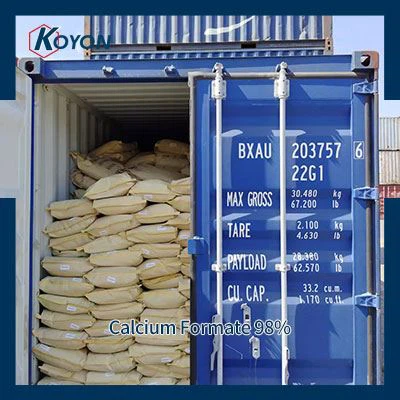
First off, let's talk a bit about what calcium formate is. Calcium formate is a white, crystalline powder with the chemical formula Ca(HCOO)₂. It's widely used in various industries, including animal feed and construction. We offer both Feed Grade Calcium Formate and Industrial Grade Calcium Formate, each tailored to specific applications.
Now, let's get to the main question: how does calcium formate boost the bonding strength of adhesives?
Chemical Reaction Mechanisms
One of the key ways calcium formate enhances adhesive bonding is through its chemical reactions. When calcium formate is added to an adhesive formulation, it can react with other components in the mix. For example, in cement - based adhesives, calcium formate can accelerate the hydration process of cement.
Cement hydration is a complex series of chemical reactions where cement reacts with water to form various hydrates. These hydrates are what give the cement its strength and binding properties. Calcium formate acts as an accelerator, speeding up the formation of calcium silicate hydrates (C - S - H) and calcium hydroxide. The faster these hydrates form, the quicker the adhesive can set and develop its bonding strength.
In polymer - based adhesives, calcium formate can interact with the polymer chains. It can act as a cross - linking agent in some cases. Cross - linking is the process of connecting polymer chains together, creating a more rigid and strong network. This network can better hold the bonded materials together, improving the overall bonding strength of the adhesive.
Physical Effects
Apart from chemical reactions, calcium formate also has some physical effects on adhesives. It can improve the rheological properties of the adhesive. Rheology is all about how a material flows and deforms under stress.
When calcium formate is added to an adhesive, it can make the adhesive more viscous in the right way. A proper viscosity is crucial for an adhesive. If it's too thin, it may run off the bonding surface before it can set. If it's too thick, it may be difficult to apply evenly. Calcium formate helps to achieve an optimal viscosity, allowing the adhesive to spread smoothly over the surface and form a uniform bond.
It also helps in reducing the porosity of the adhesive layer. Porosity can weaken the bond because it provides pathways for moisture and other substances to penetrate the adhesive. By reducing porosity, calcium formate makes the adhesive layer more dense and less permeable, enhancing its bonding strength and durability.
Compatibility with Different Adhesive Systems
Another great thing about calcium formate is its compatibility with different types of adhesive systems. Whether it's a water - based adhesive, a solvent - based adhesive, or a hot - melt adhesive, calcium formate can play a positive role.
In water - based adhesives, calcium formate is soluble in water, which makes it easy to incorporate into the formulation. It can work well with other water - soluble polymers and additives, enhancing the bonding performance without causing any compatibility issues.
For solvent - based adhesives, calcium formate can still be dispersed evenly in the solvent. It can interact with the polymer and other components in the solvent - based system, improving the bonding strength just as effectively as in water - based adhesives.
Hot - melt adhesives are adhesives that are applied in a molten state and then solidify upon cooling. Calcium formate can lower the melting point of some hot - melt adhesive formulations slightly. This allows for easier application at a lower temperature, while still maintaining or even improving the bonding strength after solidification.
Case Studies
Let's look at some real - world examples to see how calcium formate has made a difference in adhesive applications.
In the construction industry, a contractor was using a cement - based tile adhesive. They were facing issues with slow setting times and weak bonds, especially in cold weather conditions. After adding calcium formate to the adhesive formulation, the setting time was significantly reduced. The tiles were firmly bonded to the surface within a much shorter period, and the overall bonding strength was improved. This not only saved time on the construction site but also ensured a more durable installation.
In the woodworking industry, a furniture manufacturer was using a polymer - based adhesive to bond wooden parts. They noticed that the joints were not as strong as they wanted, and there was some separation over time. By incorporating calcium formate into the adhesive, the cross - linking of the polymer was enhanced. The joints became much stronger, and the furniture pieces were more stable and long - lasting.
Quality and Purity
As a calcium formate supplier, I know that the quality and purity of calcium formate are crucial for its performance in adhesives. High - quality calcium formate contains fewer impurities. Impurities can interfere with the chemical reactions and physical effects that calcium formate is supposed to have in the adhesive.
We ensure that our calcium formate products, both Feed Grade Calcium Formate and Industrial Grade Calcium Formate, meet strict quality standards. Our production process is carefully controlled to remove any unwanted substances, so you can be confident that you're getting a product that will work effectively in your adhesive formulations.
Conclusion
In conclusion, calcium formate is a versatile and effective additive for improving the bonding strength of adhesives. Through its chemical reactions, physical effects, and compatibility with different adhesive systems, it can make a significant difference in the performance of adhesives.
If you're in the adhesive manufacturing business or any industry that uses adhesives, I highly recommend giving calcium formate a try. It can help you create stronger, more durable bonds, which can lead to better - quality products and increased customer satisfaction.
If you're interested in purchasing calcium formate for your adhesive applications, feel free to reach out. We're here to discuss your specific needs and provide you with the best - quality calcium formate products. Let's work together to improve the bonding strength of your adhesives and take your products to the next level.
References
- Neville, A. M. (1995). Properties of Concrete. Pearson Education.
- Billingham, N. C., & Calvert, P. D. (2000). Polymer Science: A Comprehensive Introduction. Wiley.
- Hunkeler, D., & Arab, M. (2000). Emulsion Polymerization and Emulsion Polymers. Wiley.