

In the realm of polymer chemistry, unsaturated polyester resins (UPRs) hold a significant position due to their wide - ranging applications in various industries such as construction, automotive, and marine. These resins are synthesized through the polycondensation reaction between polyols and unsaturated and saturated dibasic acids or their anhydrides. Among the key raw materials, maleic anhydride stands out as a crucial component, offering numerous advantages in the production of UPRs. As a reliable maleic anhydride supplier, I am well - versed in the unique benefits that this compound brings to the table.
1. Reactivity and Cross - Linking Ability
Maleic anhydride is highly reactive, which is a fundamental advantage in the synthesis of UPRs. During the polycondensation reaction with polyols, maleic anhydride readily reacts to form polyester chains. The double bonds present in maleic anhydride are unsaturated, and these double bonds play a vital role in the cross - linking process. When the UPR is cured, these double bonds can react with a vinyl monomer, typically styrene, through a free - radical polymerization mechanism. This cross - linking results in a three - dimensional network structure, which gives the cured resin its desirable mechanical properties such as high strength, stiffness, and good dimensional stability.
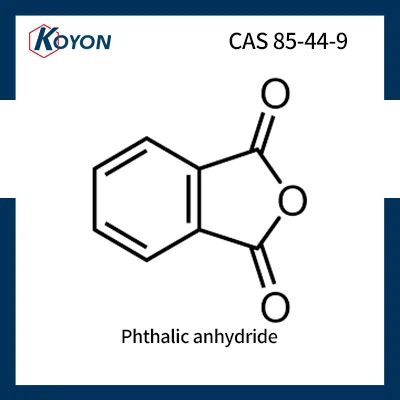
In contrast, some other anhydrides like Phthalic Anhydride are saturated and do not contribute to the cross - linking in the same way. While phthalic anhydride is often used in combination with maleic anhydride to adjust the properties of UPRs, it is the reactivity of maleic anhydride that provides the necessary cross - linking sites for the resin to achieve its final performance characteristics.
2. Control of Resin Properties
One of the remarkable features of maleic anhydride is its ability to control the properties of UPRs. By varying the amount of maleic anhydride used in the formulation, manufacturers can fine - tune the degree of unsaturation in the resin. A higher proportion of maleic anhydride leads to a resin with a greater number of double bonds, which in turn increases the cross - linking density during curing. This results in a resin with enhanced hardness, chemical resistance, and heat resistance.
Conversely, reducing the amount of maleic anhydride and increasing the proportion of saturated anhydrides like phthalic anhydride can produce a more flexible resin. This flexibility can be beneficial in applications where the resin needs to withstand some degree of deformation without cracking, such as in certain types of coatings or adhesives. This level of control over the resin properties is essential for meeting the diverse requirements of different industries.
3. Cost - Effectiveness
From a cost perspective, maleic anhydride offers significant advantages in the production of UPRs. It is relatively inexpensive compared to some other specialty anhydrides such as Pyromellitic Dianhydride. Pyromellitic dianhydride is often used in high - performance applications where extreme heat resistance and mechanical strength are required, but its high cost limits its widespread use.
Maleic anhydride provides a cost - effective alternative for producing UPRs with good overall performance. It allows manufacturers to produce resins that meet the majority of industrial needs at a reasonable cost. This cost - effectiveness makes UPRs more accessible to a wider range of industries, promoting their use in various applications from consumer products to large - scale industrial projects.
4. Compatibility with Other Ingredients
Maleic anhydride shows excellent compatibility with a variety of other ingredients commonly used in UPR formulations. It can be easily combined with different polyols, such as ethylene glycol, propylene glycol, and neopentyl glycol, to form the polyester backbone. Additionally, it is compatible with vinyl monomers like styrene, which are used for cross - linking during the curing process.
This compatibility ensures a homogeneous mixture during the resin synthesis, which is crucial for achieving consistent resin properties. Incompatible ingredients can lead to phase separation, which can negatively impact the mechanical and physical properties of the final cured resin. The ability of maleic anhydride to blend well with other components simplifies the manufacturing process and improves the quality control of UPR production.
5. Environmental Considerations
In recent years, environmental concerns have become increasingly important in the chemical industry. Maleic anhydride has some environmental advantages in the production of UPRs. It can be used to produce UPRs with relatively low volatile organic compound (VOC) emissions. During the curing process, the cross - linking reaction between maleic anhydride - based UPRs and vinyl monomers is efficient, resulting in less unreacted monomer being released into the environment.
Moreover, the production process of maleic anhydride has become more environmentally friendly over the years. Modern manufacturing techniques have reduced the energy consumption and waste generation associated with its production. This makes maleic anhydride - based UPRs a more sustainable choice compared to some other resin systems, which is in line with the growing demand for environmentally responsible products in the market.
6. Availability and Supply Stability
As a maleic anhydride supplier, I understand the importance of availability and supply stability. Maleic anhydride is produced on a large scale globally, and there is a well - established supply chain. This ensures that manufacturers of UPRs can have a reliable source of raw materials.
In contrast, some specialty anhydrides may face supply shortages due to limited production capacity or geopolitical factors. The consistent availability of maleic anhydride allows UPR manufacturers to plan their production schedules more effectively and avoid disruptions in their operations. This supply stability is crucial for industries that rely on UPRs for their production processes, as any interruption in the supply of raw materials can lead to production delays and increased costs.

Conclusion
In conclusion, the use of maleic anhydride in the production of unsaturated polyester resins offers a multitude of advantages. Its high reactivity and cross - linking ability, control over resin properties, cost - effectiveness, compatibility with other ingredients, environmental benefits, and supply stability make it an indispensable component in UPR formulations.
If you are involved in the production of unsaturated polyester resins and are looking for a reliable source of maleic anhydride, I encourage you to reach out to discuss your specific requirements. We are committed to providing high - quality maleic anhydride that meets your production needs and helps you achieve the best performance for your UPR products.
References
- Billmeyer, F. W. (1984). Textbook of Polymer Science. Wiley - Interscience.
- Marks, M. J. (2007). Unsaturated Polyester Resins. Kirk - Othmer Encyclopedia of Chemical Technology.
- Odian, G. (2004). Principles of Polymerization. Wiley.