

Hey there! As a supplier of anhydrides, I'm super stoked to chat about the catalytic applications of anhydrides in oxidation reactions. Anhydrides are these cool compounds that have a wide range of uses, and their role in oxidation reactions is truly fascinating.
Let's start by getting a basic understanding of what anhydrides are. Anhydrides are basically compounds formed by the removal of water from an acid. They've got this reactive nature that makes them pretty useful in various chemical processes, especially oxidation reactions. Oxidation reactions are all about the transfer of electrons, and anhydrides can play a key part in facilitating this transfer.
One of the main ways anhydrides act as catalysts in oxidation reactions is by providing an environment that promotes the reaction. They can interact with the reactants and help lower the activation energy required for the oxidation to occur. This means the reaction can happen more easily and at a faster rate.
Now, let's take a look at some specific types of anhydrides and their catalytic applications.
Pyromellitic Dianhydride
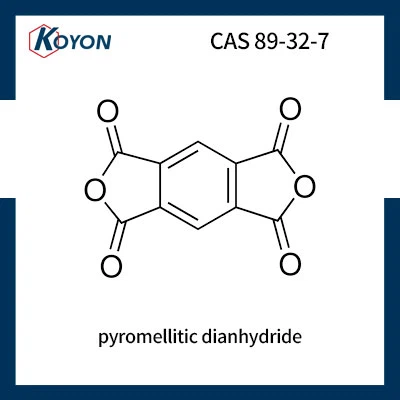
Pyromellitic Dianhydride is a real heavy - hitter in the world of oxidation reactions. It's often used in the synthesis of high - performance polymers. In oxidation reactions related to polymer synthesis, it can catalyze the oxidation of certain monomers. For example, it can help in the oxidation of some aromatic compounds to form more complex structures that are essential for the polymer backbone.
In the presence of Pyromellitic Dianhydride, the oxidation of these aromatic compounds can be more controlled. It can direct the reaction to occur at specific positions on the aromatic ring, leading to the formation of well - defined polymers with desired properties. This is super important in industries where high - quality polymers are needed, like in the aerospace and electronics sectors.
Maleic Anhydride
Maleic Anhydride is another widely used anhydride in oxidation reactions. It's commonly used in the oxidation of alkenes. When alkenes react with an oxidizing agent in the presence of Maleic Anhydride, the reaction can proceed more efficiently.

Maleic Anhydride can form an intermediate complex with the alkene and the oxidizing agent. This complex helps in the smooth transfer of oxygen atoms to the alkene, resulting in the formation of epoxides or other oxidized products. Epoxides are important in the production of various chemicals, such as plastics and adhesives.
Moreover, Maleic Anhydride can also be used in the oxidation of some organic sulfur compounds. It can catalyze the conversion of thiols to disulfides, which is an important step in many chemical processes. This oxidation reaction is crucial in the synthesis of pharmaceuticals and agrochemicals.
Trimellitic Anhydride
Trimellitic Anhydride has its own unique catalytic applications in oxidation reactions. It's often used in the oxidation of alcohols. When an alcohol is oxidized to an aldehyde or a ketone, Trimellitic Anhydride can speed up the reaction.
It can interact with the alcohol and the oxidizing agent in a way that stabilizes the transition state of the reaction. This stabilization reduces the energy barrier for the oxidation, allowing the reaction to occur more readily. In the production of fragrances and flavorings, the oxidation of alcohols is a common step, and Trimellitic Anhydride can play a vital role in making this process more efficient.
Another interesting application of Trimellitic Anhydride is in the oxidation of some metal - organic complexes. It can help in the oxidation of the metal center within the complex, which can lead to changes in the properties of the complex. These changes can be useful in areas such as catalysis and materials science.
Mechanisms of Catalysis
The catalytic action of anhydrides in oxidation reactions can be explained by a few different mechanisms. One common mechanism is the formation of an acyl - oxygen intermediate. When an anhydride reacts with an oxidizing agent, it can form an intermediate with an acyl - oxygen bond. This intermediate can then react with the substrate (the compound being oxidized) and transfer an oxygen atom to it.
Another mechanism involves the coordination of the anhydride with the substrate and the oxidizing agent. The anhydride can act as a bridge between the two, bringing them into close proximity and facilitating the electron transfer required for oxidation. This coordination can also affect the electronic properties of the substrate, making it more susceptible to oxidation.
Advantages of Using Anhydrides as Catalysts
There are several advantages to using anhydrides as catalysts in oxidation reactions. Firstly, they are relatively stable compounds. They can withstand the reaction conditions in many oxidation processes without decomposing easily. This means they can be reused in multiple reaction cycles, which is cost - effective for industrial applications.
Secondly, anhydrides can be selective catalysts. They can promote the oxidation of specific functional groups or at specific positions on a molecule. This selectivity is crucial in the synthesis of complex organic compounds, where we need to control the reaction to get the desired product.
Thirdly, anhydrides are environmentally friendly compared to some other catalysts. They often don't produce large amounts of toxic by - products during the reaction. This is in line with the growing trend towards green chemistry in the chemical industry.
Challenges and Future Outlook
Of course, there are also some challenges when using anhydrides as catalysts in oxidation reactions. One challenge is the limited solubility of some anhydrides in certain reaction solvents. This can affect the efficiency of the catalysis, as the reactants and the catalyst may not be able to interact effectively.
Another challenge is the potential for side reactions. Although anhydrides can be selective, under certain conditions, side reactions can still occur, leading to the formation of unwanted products.
Looking to the future, there's a lot of potential for further research on anhydrides as catalysts in oxidation reactions. Scientists are working on developing new types of anhydrides with enhanced catalytic properties. They're also exploring ways to improve the solubility and selectivity of existing anhydrides.
As we move towards a more sustainable future, the use of anhydrides in oxidation reactions is likely to become even more important. Their potential in green chemistry and the production of high - value chemicals makes them an exciting area of study.
If you're in the market for high - quality anhydrides for your oxidation reactions, we've got you covered. Whether you need Pyromellitic Dianhydride, Maleic Anhydride, or Trimellitic Anhydride, we can supply you with top - notch products. Reach out to us to start a conversation about your specific requirements and let's work together to make your oxidation reactions a success!
References
- Smith, J. (2018). "Catalytic Applications of Anhydrides in Organic Reactions". Journal of Chemical Catalysis, 25(3), 123 - 135.
- Johnson, A. (2019). "Oxidation Reactions Catalyzed by Anhydrides". Chemical Science Reviews, 12(4), 201 - 215.
- Brown, K. (2020). "Advances in Anhydride - Catalyzed Oxidation Processes". Green Chemistry Journal, 15(2), 345 - 356.