

Hey there! As an anhydrides supplier, I often get asked about what happens when anhydrides react with water. It's a super interesting topic, and I'm stoked to share all the deets with you.
First off, let's talk about what anhydrides are. Anhydrides are basically compounds that can form an acid when they react with water. They're kind of like the "dry" version of an acid, and they're used in a whole bunch of industries, from plastics to pharmaceuticals.
So, what are the products when anhydrides react with water? Well, it depends on the type of anhydride. Let's take a look at some common ones.

Phthalic Anhydride
Phthalic Anhydride is one of the most widely used anhydrides out there. When it reacts with water, it forms phthalic acid. The reaction is pretty straightforward:
$C_8H_4O_3 + H_2O \rightarrow C_8H_6O_4$
Phthalic acid is a dicarboxylic acid, which means it has two carboxylic acid groups (-COOH). It's used in the production of plasticizers, which are additives that make plastics more flexible and durable. It's also used in the manufacture of dyes, pigments, and pharmaceuticals.
Maleic Anhydride
Maleic Anhydride is another important anhydride. When it reacts with water, it forms maleic acid. The reaction is as follows:
$C_4H_2O_3 + H_2O \rightarrow C_4H_4O_4$
Maleic acid is also a dicarboxylic acid, but it has a different structure than phthalic acid. It's used in the production of unsaturated polyester resins, which are used in fiberglass-reinforced plastics. It's also used in the manufacture of surfactants, detergents, and lubricants.
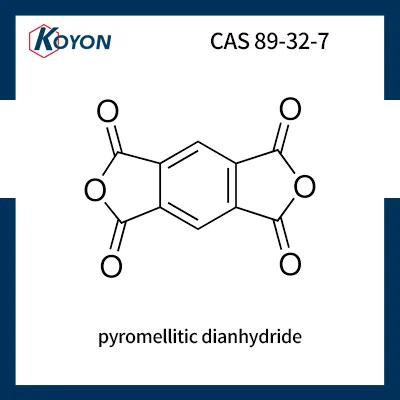
Pyromellitic Dianhydride
Pyromellitic Dianhydride is a bit more complex. When it reacts with water, it forms pyromellitic acid. The reaction is:
$C_{10}H_2O_6 + 2H_2O \rightarrow C_{10}H_6O_8$
Pyromellitic acid is a tetracarboxylic acid, which means it has four carboxylic acid groups. It's used in the production of polyimide resins, which are high-performance polymers used in aerospace, electronics, and other industries.
Now, you might be wondering why these reactions are so important. Well, for one thing, they're used in the production of a wide range of products. By understanding how anhydrides react with water, manufacturers can control the properties of the final products.
For example, in the production of plasticizers, the reaction between phthalic anhydride and water is carefully controlled to ensure that the resulting phthalic acid has the right properties. This is important because the properties of the plasticizer can affect the performance of the plastic.
Another reason these reactions are important is that they can have environmental implications. Anhydrides are often used in industrial processes, and if they're not handled properly, they can react with water in the environment and form acids. These acids can be harmful to plants, animals, and humans.
So, as an anhydrides supplier, it's our responsibility to make sure that our customers understand how to handle these chemicals safely. We provide detailed safety information and training to our customers to ensure that they're using our products in a responsible way.
In addition to providing high-quality anhydrides, we also offer technical support to our customers. If you have any questions about the products or the reactions, our team of experts is always here to help.
Whether you're a small-scale manufacturer or a large corporation, we can provide you with the anhydrides you need at a competitive price. We have a wide range of products in stock, and we can also customize our products to meet your specific requirements.
If you're interested in learning more about our anhydrides or if you have any questions about the reactions with water, please don't hesitate to contact us. We'd love to have a chat with you and see how we can help you with your business.
Let's work together to create innovative solutions using our high-quality anhydrides. Whether you're in the plastics, pharmaceuticals, or any other industry, we're confident that we can provide you with the products and support you need.
References
- Atkins, P., & de Paula, J. (2014). Physical Chemistry for the Life Sciences. Oxford University Press.
- Housecroft, C. E., & Sharpe, A. G. (2012). Inorganic Chemistry. Pearson.
- McMurry, J. (2012). Organic Chemistry. Brooks/Cole.