

What are the side - reactions in the industrial production of maleic anhydride?
As a supplier of maleic anhydride, I am deeply involved in the nuances of its industrial production. Maleic anhydride is a crucial chemical intermediate with a wide range of applications, including the production of unsaturated polyester resins, alkyd resins, and various pharmaceuticals and agricultural chemicals. However, the industrial production of maleic anhydride is not without its challenges, one of the most significant being the occurrence of side - reactions.
Overview of Maleic Anhydride Production
Most commonly, maleic anhydride is produced through the catalytic oxidation of n - butane in the vapor phase. The main reaction can be represented as:
[C_{4}H_{10}+ 3.5O_{2}\xrightarrow{\text{Catalyst}}C_{4}H_{2}O_{3}+ 4H_{2}O]

This reaction takes place at high temperatures (around 350 - 450°C) and in the presence of a suitable catalyst, often a vanadium - phosphorus - oxide (VPO) catalyst. The reaction conditions are carefully controlled to maximize the yield of maleic anhydride.
Side - Reactions in the Production Process
-
**Complete Combustion
One of the most prominent side - reactions is the complete combustion of n - butane. When the reaction conditions are not carefully regulated, n - butane can react with oxygen to form carbon dioxide and water instead of maleic anhydride. The reaction is as follows:
[C_{4}H_{10}+\ 6.5O_{2}\rightarrow4CO_{2}+ 5H_{2}O]
This reaction is highly exothermic and can lead to a significant loss of raw materials and energy. High temperatures, excessive oxygen levels, or an ineffective catalyst can all contribute to an increase in the rate of complete combustion. -
**Formation of Partial Oxidation By - Products
In addition to complete combustion, there are also partial oxidation by - products formed during maleic anhydride production. These can include compounds such as furan, succinic anhydride, and acetic acid. For example, the formation of furan can occur through the following reaction:
[C_{4}H_{10}+ 2O_{2}\rightarrow C_{4}H_{4}O+ 3H_{2}O]
The presence of these by - products not only reduces the yield of maleic anhydride but also complicates the purification process. They need to be separated from the desired product, which requires additional energy and resources. -
**Catalyst - Related Side - Reactions
The catalyst used in maleic anhydride production can also contribute to side - reactions. Over time, the catalyst may undergo deactivation or form unwanted compounds on its surface. For instance, the deposition of carbonaceous materials on the catalyst surface can block the active sites, reducing its effectiveness. This can lead to an increase in side - reaction rates and a decrease in maleic anhydride selectivity.
Impact of Side - Reactions on Production
The side - reactions in maleic anhydride production have several negative impacts on the industrial process. Firstly, they reduce the overall yield of maleic anhydride. Since the formation of by - products consumes the raw materials, less n - butane is available for the formation of the desired product. This directly affects the profitability of the production process.
Secondly, the purification of the product becomes more challenging and costly. The by - products need to be removed from the maleic anhydride to meet the required quality standards. This often involves multiple separation steps, such as distillation and absorption, which require additional equipment and energy.
Finally, the side - reactions can also have an impact on the environment. The production of carbon dioxide through complete combustion contributes to greenhouse gas emissions. Additionally, the disposal of the by - products can be a challenge, as some of them may be hazardous.
Strategies to Minimize Side - Reactions
To minimize the side - reactions in maleic anhydride production, several strategies can be employed. One approach is to optimize the reaction conditions, such as temperature, pressure, and the ratio of reactants. By carefully controlling these parameters, the selectivity of the main reaction can be increased.
Another strategy is to improve the catalyst. Research is constantly being conducted to develop more selective and stable catalysts. For example, modifying the composition of the VPO catalyst or adding promoters can enhance its performance and reduce the occurrence of side - reactions.
Proper reactor design and operation are also crucial. Reactors can be designed to ensure a uniform distribution of reactants and temperature, which helps to minimize the formation of hot spots that can lead to side - reactions.
Comparison with Other Anhydrides Production
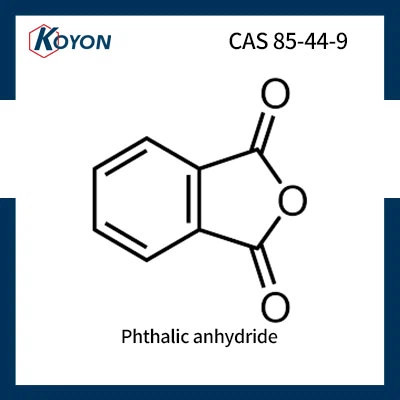
In comparison to the production of other anhydrides such as Pyromellitic Dianhydride and Phthalic Anhydride, the side - reactions in maleic anhydride production have some similarities and differences. For example, in the production of these anhydrides, there are also concerns about complete combustion and the formation of by - products. However, the specific reaction mechanisms and by - products can vary depending on the starting materials and reaction conditions.
Conclusion and Call to Action
Understanding the side - reactions in the industrial production of Maleic Anhydride is essential for improving the efficiency and profitability of the production process. At our company, we are committed to providing high - quality maleic anhydride by continuously optimizing our production techniques to minimize side - reactions.
If you are in the market for maleic anhydride or have any questions about its production and applications, we encourage you to reach out for a discussion. Our team of experts is ready to assist you in finding the best solutions for your specific needs.
References
- Stiles, A. B. (1983). Catalyst Manufacture: Laboratory and Commercial Preparations. Marcel Dekker.
- Sundaresan, S. (2008). Chemical Reaction Engineering. Prentice Hall.
- Haber, J., & Grzybowska, E. (1997). Catalysis and Automotive Pollution Control II. Elsevier.