

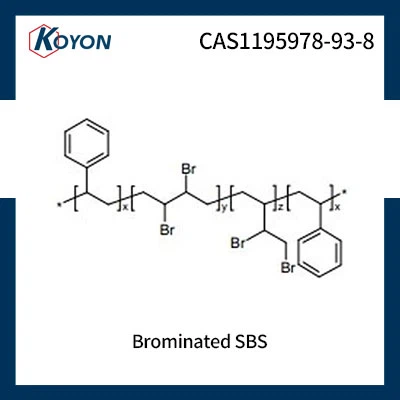
Brominated SBS (CAS 1195978-93-8) is widely used in the modification of materials such as rubber and plastics as well as in the field of flame retardants. The synthesis of brominated SBS is usually achieved through free radical bromination reactions. First, dissolve SBS in an appropriate amount of organic solvent (such as trichloromethane or tetrachloromethane), then add bromine (Br₂), and react at 40-70°C to cause bromine molecules to undergo addition with the unsaturated double bonds in SBS to form brominated SBS. To enhance the reaction efficiency, catalysts (such as FeCl₃ or BPO) are often added. The progress should be monitored by observing the color change and sampling analysis. Once the expected bromination degree is reached, a reducing agent (such as sodium thiosulfate) is added to terminate the reaction and remove the residual bromine. Subsequently, the catalyst and impurities were filtered out. Then, the organic solvent was removed through vacuum distillation or solvent evaporation, the crude brominated SBS is produced. Finally, the refine brominated SBS was produced through purification.
Click here to search for chemical products such as Brominated SBS
https://www.koyonchem.com/flame-retardant/additive-flame-retardants/brominated-sbs.html
Feel free to contact us: