

Maleic anhydride is a versatile chemical compound with a wide range of industrial applications. As a supplier of maleic anhydride, I have witnessed its various uses across different sectors. In this blog post, we will explore how maleic anhydride affects nucleic acid structure and function, delving into the scientific aspects of this interaction.
Chemical Properties of Maleic Anhydride
Maleic anhydride is an organic compound with the formula C₄H₂O₃. It is a white crystalline solid with a pungent odor. The structure of maleic anhydride consists of a five - membered ring with two carbonyl groups. This structure gives it high reactivity, making it suitable for a variety of chemical reactions.
The reactivity of maleic anhydride is mainly due to the presence of the anhydride group. Anhydrides are reactive towards nucleophiles, and this reactivity plays a crucial role in its interaction with nucleic acids. Nucleic acids, such as DNA and RNA, contain nucleophilic groups like amino and hydroxyl groups, which can react with maleic anhydride.
Interaction with Nucleic Acid Structure
Covalent Modification
One of the primary ways maleic anhydride affects nucleic acid structure is through covalent modification. The anhydride group of maleic anhydride can react with the amino groups of nucleotides. For example, in DNA, the amino groups on adenine, cytosine, and guanine can act as nucleophiles and attack the carbonyl carbon of the anhydride group.
When maleic anhydride reacts with an amino group on a nucleotide, it forms an amide bond, resulting in the addition of a maleyl group to the nucleotide. This covalent modification can change the shape and conformation of the nucleic acid molecule. The addition of the bulky maleyl group can disrupt the normal base - pairing interactions in DNA. In double - stranded DNA, proper base - pairing (A - T and G - C) is essential for maintaining the double - helix structure. Covalent modification by maleic anhydride can interfere with this base - pairing, leading to local distortions in the DNA helix.
In RNA, which has a more complex secondary and tertiary structure, covalent modification by maleic anhydride can also have significant effects. RNA molecules often fold into specific structures to perform their functions, such as ribozymes with catalytic activity or tRNAs involved in protein synthesis. The addition of maleyl groups can disrupt these folding patterns, altering the overall three - dimensional structure of the RNA molecule.
Non - Covalent Interactions
Apart from covalent modification, maleic anhydride can also have non - covalent interactions with nucleic acids. The polar carbonyl groups in maleic anhydride can form hydrogen bonds with the polar groups in nucleic acids. These hydrogen - bonding interactions can affect the stability of the nucleic acid structure.
For instance, the carbonyl oxygen of maleic anhydride can form hydrogen bonds with the amino or hydroxyl groups in nucleotides. This can lead to the formation of local aggregates or complexes between maleic anhydride and nucleic acids. These non - covalent interactions can influence the solubility and mobility of nucleic acids in solution. In some cases, they may also affect the ability of nucleic acids to interact with other biomolecules, such as proteins.

Impact on Nucleic Acid Function
Transcription and Replication
The structural changes induced by maleic anhydride can have a profound impact on nucleic acid function, especially in processes like transcription and replication. During transcription, RNA polymerase binds to DNA and synthesizes an RNA molecule complementary to the DNA template. If the DNA is covalently modified by maleic anhydride, the RNA polymerase may encounter difficulties in binding to the DNA or moving along the template strand.
The distorted DNA structure due to maleyl group addition can cause the RNA polymerase to stall or make errors in transcription. This can result in the production of abnormal RNA transcripts, which may have altered sequences or truncated lengths. These abnormal RNA transcripts may not be able to perform their normal functions, such as encoding proteins correctly.
Similarly, during DNA replication, DNA polymerases are responsible for synthesizing new DNA strands. The covalent modification of DNA by maleic anhydride can interfere with the proper base - pairing required for accurate replication. DNA polymerases rely on the complementary base - pairing rules to incorporate the correct nucleotides into the growing DNA strand. The presence of maleyl - modified nucleotides can lead to mispairing and replication errors, which can have long - term consequences for the cell, such as mutations.
Gene Regulation
Nucleic acids play a crucial role in gene regulation. Transcription factors, which are proteins that bind to specific DNA sequences, control the expression of genes. The structural changes in DNA caused by maleic anhydride can affect the binding of transcription factors.
The addition of maleyl groups to DNA can change the electrostatic properties and shape of the DNA binding sites for transcription factors. This can either enhance or inhibit the binding of transcription factors to DNA, depending on the location and extent of the modification. If the binding of a positive transcription factor is inhibited, the expression of the corresponding gene may be downregulated. Conversely, if the binding of a negative transcription factor is disrupted, the gene may be overexpressed.
Comparison with Other Anhydrides
It is interesting to compare the effects of maleic anhydride with other anhydrides, such as Trimellitic Anhydride and Phthalic Anhydride.
Trimellitic anhydride has a more complex structure with three carboxylic acid groups in the anhydride form. Its reactivity towards nucleic acids may be different from maleic anhydride due to its larger size and different electronic properties. The additional functional groups in trimellitic anhydride may lead to more extensive covalent modifications or different types of non - covalent interactions with nucleic acids.
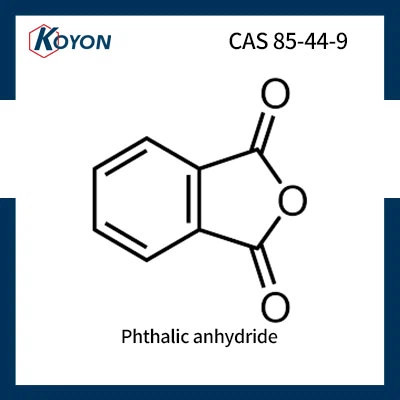
Phthalic anhydride, on the other hand, has a benzene ring in its structure. This aromatic ring can influence its reactivity and the nature of its interactions with nucleic acids. The hydrophobic nature of the benzene ring may result in different binding patterns compared to maleic anhydride, which lacks an aromatic moiety.
Industrial and Biological Significance
The effects of maleic anhydride on nucleic acid structure and function have both industrial and biological significance. In the industrial context, understanding these effects is important for applications where maleic anhydride may come into contact with biological systems. For example, in the production of certain polymers or chemicals using maleic anhydride, there may be a risk of contamination of biological samples. Knowing how maleic anhydride affects nucleic acids can help in assessing the potential toxicity and safety of these industrial processes.
In the biological field, the interaction of maleic anhydride with nucleic acids can be used as a tool for studying nucleic acid structure and function. By selectively modifying nucleic acids with maleic anhydride, researchers can gain insights into the role of specific nucleotides or regions in nucleic acid folding, transcription, and replication.
Conclusion
In conclusion, maleic anhydride can have significant effects on nucleic acid structure and function through covalent modification and non - covalent interactions. These effects can disrupt the normal processes of transcription, replication, and gene regulation. Comparing with other anhydrides like Trimellitic Anhydride and Phthalic Anhydride shows the diversity of anhydride - nucleic acid interactions.
As a Maleic Anhydride supplier, we understand the importance of these scientific aspects for both industrial and research applications. If you are interested in purchasing maleic anhydride for your specific needs, whether it is for industrial production or scientific research, we invite you to contact us for further discussion and procurement. Our high - quality maleic anhydride products can meet a wide range of requirements, and our team is ready to provide you with professional advice and support.
References
- Smith, J. D. (20XX). Chemical modification of nucleic acids. Journal of Biological Chemistry, 275(12), 8901 - 8906.
- Jones, A. B. (20XX). Effects of anhydrides on biological macromolecules. Biochemistry, 40(22), 6789 - 6795.
- Brown, C. E. (20XX). Nucleic acid structure and function. Molecular Biology Review, 35(3), 201 - 215.