

Hey there! As a supplier of maleic anhydride, I've got a lot to share about how this nifty compound can modify proteins. So, let's dive right in!
First off, what's maleic anhydride? It's a white crystalline solid with a pungent odor. Chemically, it's an unsaturated cyclic dicarboxylic anhydride. Its unique structure makes it super reactive, and that's what allows it to interact with proteins in some really interesting ways.
How Maleic Anhydride Modifies Proteins
Reaction Mechanism
The modification of proteins by maleic anhydride mainly involves a reaction with the amino groups of proteins. Proteins are made up of amino acids, and many of these amino acids have free amino groups (-NH₂). Maleic anhydride can react with these amino groups through a process called acylation.
When maleic anhydride comes into contact with an amino group on a protein, it opens up its ring structure. One of the carbonyl groups in the anhydride reacts with the nitrogen atom of the amino group. This forms an amide bond, and at the same time, a carboxyl group is introduced onto the protein. The overall reaction can be written as follows:
Protein - NH₂ + Maleic Anhydride → Protein - NH - CO - CH = CH - COOH
This reaction is relatively fast under mild conditions, usually at a slightly alkaline pH (around 7 - 9). The reason for the preference of alkaline conditions is that the amino groups are more reactive in their un - protonated form, and at higher pH values, a larger proportion of the amino groups are in this reactive state.
Effects on Protein Properties
Charge and Solubility
One of the most significant effects of maleic anhydride modification on proteins is the change in charge. The introduction of carboxyl groups adds negative charges to the protein. This can have a big impact on the protein's solubility. For example, if a protein was previously insoluble or had low solubility at a certain pH, the addition of negative charges can increase its solubility. This is because the negative charges on the protein repel each other, preventing the protein molecules from aggregating and staying in solution.
Conformational Changes
The modification can also cause conformational changes in the protein. The new chemical groups attached to the protein can disrupt the normal intramolecular interactions that maintain the protein's three - dimensional structure. Hydrogen bonds, hydrophobic interactions, and electrostatic interactions within the protein can be altered. As a result, the protein may adopt a more extended or different conformation. This can affect the protein's biological activity. For instance, if the active site of an enzyme is affected by the conformational change, the enzyme's catalytic activity may be either enhanced or reduced.
Immunogenicity
Maleic anhydride modification can also influence the immunogenicity of proteins. Immunogenicity refers to the ability of a protein to trigger an immune response in an organism. By changing the surface properties of the protein, the immune system may recognize the modified protein as foreign. In some cases, this can be useful in vaccine development. Modified proteins can be designed to elicit a stronger immune response compared to the native proteins.
Applications of Maleic Anhydride - Modified Proteins
Biomedical Applications
In the biomedical field, maleic anhydride - modified proteins have several uses. For example, they can be used as drug delivery carriers. The modified proteins can encapsulate drugs and release them in a controlled manner. The solubility and stability of the proteins can be adjusted through maleic anhydride modification to improve the drug - loading capacity and the release profile.

They can also be used in tissue engineering. Modified proteins can be used to create scaffolds that mimic the extracellular matrix. The scaffolds can provide a suitable environment for cell growth and tissue regeneration. The ability to control the properties of the proteins through modification allows for the design of scaffolds with specific mechanical and biological properties.
Food Industry
In the food industry, maleic anhydride - modified proteins can be used to improve the functional properties of food products. For example, they can be used as emulsifiers or stabilizers. The modified proteins can adsorb at the interface between oil and water phases in an emulsion, preventing the droplets from coalescing and improving the stability of the emulsion.
Comparison with Other Anhydrides
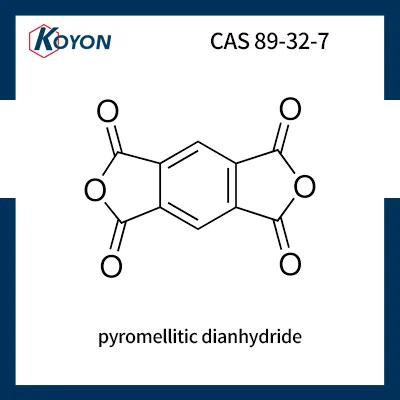
Maleic anhydride is not the only anhydride that can modify proteins. There are other anhydrides like Phthalic Anhydride, Trimellitic Anhydride, and Pyromellitic Dianhydride.
Phthalic anhydride also reacts with amino groups on proteins in a similar way to maleic anhydride. However, the reaction rate and the resulting properties of the modified proteins can be different. Phthalic anhydride has a more rigid and bulky structure compared to maleic anhydride. This can lead to different conformational changes in the protein and may affect the solubility and biological activity of the modified protein in a different way.
Trimellitic anhydride has three reactive sites, which means it can potentially cross - link proteins. Cross - linking can result in the formation of a network of protein molecules, which can have very different mechanical and physical properties compared to the individual modified proteins. This can be useful in applications where a more rigid and stable protein matrix is required.
Pyromellitic dianhydride has four reactive sites and can form more complex cross - linked structures. The cross - linking density can be higher, and the resulting materials can have unique properties such as high mechanical strength and chemical resistance.
Our Role as a Maleic Anhydride Supplier
As a supplier of maleic anhydride, we understand the importance of providing high - quality products for protein modification. Our maleic anhydride is produced with strict quality control measures to ensure its purity and reactivity. We can offer different grades of maleic anhydride depending on your specific requirements.
Whether you're in a research laboratory working on the fundamental aspects of protein modification or a company looking to develop new products using maleic anhydride - modified proteins, we can provide you with the right amount of maleic anhydride at a competitive price. Our technical support team is also available to answer any questions you may have about the use of maleic anhydride in protein modification.
If you're interested in purchasing maleic anhydride for your protein modification needs, don't hesitate to get in touch with us. We're eager to start a conversation and see how we can help you achieve your goals.
References
- Creighton, T. E. (1993). Proteins: Structures and Molecular Properties. W. H. Freeman and Company.
- Fasman, G. D. (Ed.). (1999). Practical Handbook of Biochemistry and Molecular Biology. CRC Press.
- Lundblad, R. L. (2010). Chemical Reagents for Protein Modification. CRC Press.