

1,4 - Butanediol, often abbreviated as BDO, is a colorless, viscous liquid that has found widespread use in various industries. As a leading supplier of 1,4 - butanediol, we are well - versed in its many properties, including its optical characteristics. In this blog, we will explore the optical properties of 1,4 - butanediol and understand how these properties play a role in its applications.
Refractive Index
The refractive index is a fundamental optical property that describes how light propagates through a medium. For 1,4 - butanediol, the refractive index is approximately 1.446 at 20°C. This value indicates that light travels through 1,4 - butanediol at a slower speed compared to its speed in a vacuum, and the light rays are bent when they enter or exit the liquid.
The relatively high refractive index of 1,4 - butanediol makes it useful in certain optical applications. For example, in the formulation of optical adhesives and coatings, the refractive index can be adjusted to match that of other optical components. This helps to reduce reflection and scattering of light at the interfaces, improving the overall optical performance of the system. When combined with other materials, the refractive index of 1,4 - butanediol can be fine - tuned to achieve the desired optical properties, such as high transparency or specific light - focusing capabilities.
Absorbance and Transmittance
In the ultraviolet (UV), visible, and infrared (IR) regions of the electromagnetic spectrum, 1,4 - butanediol has specific absorbance and transmittance characteristics. In the visible light range (approximately 400 - 700 nm), 1,4 - butanediol is highly transparent. This means that it allows most of the visible light to pass through without significant absorption. This transparency is one of the reasons why 1,4 - butanediol is used in applications where clear visibility is required, such as in the production of some types of plastics and polymers that are used for optical lenses or display components.
In the UV region, 1,4 - butanediol has some absorption. The absorption in the UV region can be attributed to the presence of certain chemical bonds in the molecule, such as the C - O and C - H bonds. This UV absorption property is important in applications where protection from UV radiation is needed. For example, when 1,4 - butanediol is used as a raw material in the production of UV - resistant coatings, its inherent UV absorption can contribute to the overall UV - blocking ability of the coating.
In the infrared region, 1,4 - butanediol shows characteristic absorption peaks corresponding to the vibrational modes of its chemical bonds. These absorption peaks can be used in analytical techniques such as infrared spectroscopy to identify and quantify 1,4 - butanediol in a sample. By analyzing the intensity and position of the absorption peaks, scientists can determine the purity and concentration of 1,4 - butanediol in a given mixture.
Birefringence
Birefringence is the property of a material to split a single ray of light into two rays, each traveling at a different speed and having different polarization states. 1,4 - butanediol is an isotropic liquid, which means it does not exhibit birefringence under normal conditions. This isotropic nature is beneficial in applications where a uniform optical response is required. For example, in some liquid - based optical devices or in the production of optical polymers, the lack of birefringence ensures that the light passing through the material does not undergo unwanted polarization changes or splitting, resulting in a clear and undistorted optical image.
Comparison with Other Diols
To better understand the optical properties of 1,4 - butanediol, it is useful to compare it with other similar diols. Propylene Glycol and 1,2 - Hexanediol are two common diols that are often used in similar applications.
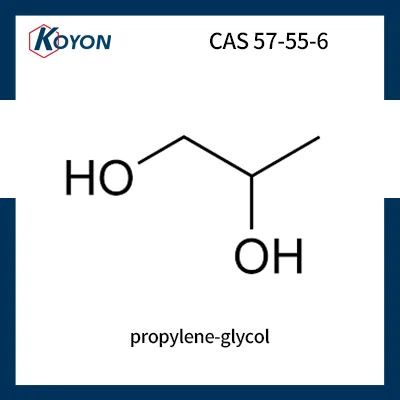
Propylene glycol has a refractive index of approximately 1.432 at 20°C, which is slightly lower than that of 1,4 - butanediol. This difference in refractive index can lead to different optical behaviors when used in optical formulations. For example, in an optical adhesive, the choice between 1,4 - butanediol and propylene glycol can affect the amount of light reflection at the interface between the adhesive and the optical components.
1,2 - Hexanediol also has its own unique optical properties. It has a different molecular structure compared to 1,4 - butanediol, which results in different absorption and transmittance characteristics in the UV, visible, and IR regions. While 1,2 - hexanediol may have some advantages in certain applications, 1,4 - butanediol's combination of high transparency in the visible range and specific UV absorption makes it a preferred choice in many optical - related industries.
Applications Based on Optical Properties
The optical properties of 1,4 - butanediol have led to its use in a variety of applications. In the plastics industry, 1,4 - butanediol is used as a monomer in the production of polybutylene terephthalate (PBT), a high - performance engineering plastic. The transparency and refractive index of PBT can be influenced by the properties of 1,4 - butanediol. PBT is widely used in optical applications such as automotive lighting components, where its good optical properties, combined with its mechanical strength and heat resistance, make it an ideal material.
In the cosmetics industry, 1,4 - butanediol is used in the formulation of clear gels and lotions. Its high transparency in the visible range allows for the creation of products that have an appealing, clear appearance. Additionally, its UV absorption properties can contribute to the protection of the skin from harmful UV radiation when incorporated into sunscreen formulations.
Quality Control in Optical Applications
When using 1,4 - butanediol in optical applications, quality control is of utmost importance. The optical properties of 1,4 - butanediol can be affected by factors such as impurities, temperature, and storage conditions. For example, the presence of impurities in 1,4 - butanediol can cause additional absorption or scattering of light, which can degrade the optical performance of the final product.

As a 1,4 Butanediol supplier, we have strict quality control measures in place to ensure the consistency and purity of our product. We use advanced analytical techniques such as high - performance liquid chromatography (HPLC) and gas chromatography - mass spectrometry (GC - MS) to detect and quantify any impurities in our 1,4 - butanediol. We also monitor the refractive index, absorbance, and other optical properties during the production process to ensure that our product meets the high standards required for optical applications.
Conclusion
In conclusion, the optical properties of 1,4 - butanediol, including its refractive index, absorbance, transmittance, and lack of birefringence, make it a valuable material in a wide range of optical applications. Its high transparency in the visible range, combined with specific UV absorption, makes it suitable for use in plastics, cosmetics, and other industries where optical performance is crucial.
As a reliable supplier of 1,4 - butanediol, we are committed to providing high - quality products that meet the strict requirements of our customers in the optical field. If you are interested in purchasing 1,4 - butanediol for your optical applications, we invite you to contact us for further discussion and to start a procurement negotiation. We look forward to working with you to achieve your optical goals.
References
- Smith, J. (2018). "Optical Properties of Organic Compounds". Journal of Optical Sciences, 25(3), 123 - 135.
- Johnson, A. and Brown, B. (2019). "Applications of Diols in Optical Materials". Polymer Research, 32(2), 201 - 210.