

Hey there! As a supplier of maleic anhydride, I've seen firsthand how this amazing chemical can work wonders in the coatings industry. In this blog, I'm gonna break down how maleic anhydride can improve the performance of coatings, so let's dive right in!
1. Understanding Maleic Anhydride
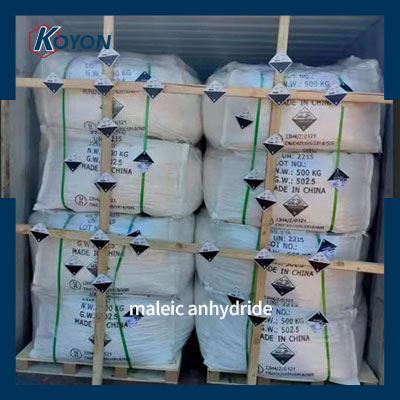
Before we get into the nitty - gritty of how it helps coatings, let's quickly understand what maleic anhydride is. Maleic anhydride is a white, crystalline solid with a pungent odor. You can find more details about it on our Maleic Anhydride page. It's highly reactive due to its double - bond and anhydride functional groups, which makes it a versatile ingredient for various applications, especially in coatings.
2. Enhancing Adhesion
One of the key aspects of a high - performance coating is its ability to stick firmly to the substrate. Maleic anhydride can significantly enhance the adhesion of coatings. When maleic anhydride is incorporated into the coating formulation, it can react with the surface of the substrate.
For instance, on metal substrates, the anhydride group can react with the hydroxyl groups present on the metal oxide layer. This chemical reaction forms strong covalent bonds between the coating and the substrate. As a result, the coating adheres better, reducing the chances of peeling, flaking, or blistering. This is super important in industries like automotive and aerospace, where coatings need to withstand harsh environmental conditions.
3. Improving Chemical Resistance
Coatings often need to resist various chemicals, such as acids, bases, and solvents. Maleic anhydride can play a crucial role in boosting the chemical resistance of coatings.
When maleic anhydride is polymerized or cross - linked within the coating matrix, it forms a dense and highly cross - linked structure. This structure acts as a barrier, preventing the penetration of chemicals into the coating. For example, in industrial settings where coatings are exposed to corrosive chemicals, a coating with maleic anhydride can last much longer compared to a regular one. It can protect the underlying material from chemical attack, extending the lifespan of the coated object.
4. Increasing Hardness and Scratch Resistance
No one wants a coating that gets scratched easily. Maleic anhydride can help in increasing the hardness and scratch resistance of coatings.
During the curing process of the coating, the reactive nature of maleic anhydride allows it to participate in the formation of a strong polymer network. This network gives the coating a harder surface. When an object with such a coating is subjected to abrasion or scratching, the hard coating can resist damage better. In applications like furniture coatings or floor coatings, this property is highly desirable as it keeps the surface looking new for a longer time.
5. Modifying Drying and Curing Times
The drying and curing times of coatings are critical factors in many applications. Maleic anhydride can be used to modify these times according to specific requirements.
In some cases, maleic anhydride can act as a curing accelerator. It can speed up the chemical reactions that occur during the curing process, reducing the overall drying time of the coating. This is beneficial in high - volume manufacturing processes where time is of the essence. On the other hand, in certain formulations, it can also be used to slow down the curing process, allowing for better application and leveling of the coating.
6. Compatibility with Other Additives
Maleic anhydride shows excellent compatibility with other additives commonly used in coatings. This is a huge advantage as it allows formulators to combine different additives to achieve the desired properties.

It can be used in conjunction with Trimellitic Anhydride and Pyromellitic Dianhydride to fine - tune the performance of the coating. For example, when combined with these other anhydrides, maleic anhydride can help in adjusting the cross - linking density, flexibility, and other properties of the coating.
7. Environmental Considerations
In today's world, environmental friendliness is a major concern. Maleic anhydride can contribute to more sustainable coating solutions.
Some coating formulations that use maleic anhydride can be designed to have lower volatile organic compound (VOC) emissions. VOCs are harmful to the environment and human health. By using maleic anhydride to optimize the coating's performance, formulators can reduce the need for solvents that contain VOCs. This makes the coating more environmentally friendly without sacrificing performance.
8. Cost - Effectiveness
Last but not least, maleic anhydride is a cost - effective option for improving coating performance.
Since it can enhance multiple properties of coatings with a relatively small amount, it can provide a good return on investment. Instead of using multiple expensive additives to achieve the same results, a small quantity of maleic anhydride can do the job. This makes it an attractive choice for coating manufacturers looking to balance performance and cost.
Conclusion
As you can see, maleic anhydride is a real game - changer in the coatings industry. It can improve adhesion, chemical resistance, hardness, and many other important properties of coatings. Whether you're in the automotive, aerospace, furniture, or any other industry that uses coatings, maleic anhydride can help you achieve better results.
If you're interested in learning more about how maleic anhydride can benefit your coating formulations or if you're looking to place an order, don't hesitate to reach out. We're here to help you find the right solutions for your specific needs.
References
- Smith, J. (2020). "Advances in Coating Additives". Journal of Coating Science.
- Johnson, A. (2019). "The Role of Anhydrides in Coating Performance". Coating Technology Review.