

Hey there! As an anhydrides supplier, I often get asked about the piezoelectric properties of anhydrides. Piezoelectricity is a pretty cool phenomenon where certain materials generate an electric charge in response to mechanical stress, and vice versa. It's used in a ton of applications, from ultrasonic sensors to energy harvesters. So, let's dig into what the piezoelectric properties of anhydrides are and how they can be useful.
What Are Anhydrides?
First off, let's quickly go over what anhydrides are. Anhydrides are compounds formed by removing water from an acid. They're widely used in various industries, like plastics, coatings, and adhesives. Some common types of anhydrides include Trimellitic Anhydride, Pyromellitic Dianhydride, and Maleic Anhydride.
Piezoelectricity Basics
Before we get into the piezoelectric properties of anhydrides, let's understand the basics of piezoelectricity. When a piezoelectric material is squeezed or stretched, it generates an electric charge on its surface. This is called the direct piezoelectric effect. On the flip side, when an electric field is applied to a piezoelectric material, it changes shape. This is the converse piezoelectric effect.
Piezoelectric Properties of Anhydrides
Now, let's talk about the piezoelectric properties of anhydrides. While not all anhydrides exhibit strong piezoelectricity, some do show interesting piezoelectric behavior. For example, certain anhydride-based polymers can have piezoelectric properties. These polymers are made by combining anhydrides with other monomers to form a chain-like structure.
The piezoelectric properties of anhydride-based polymers depend on a few factors. One important factor is the molecular structure of the polymer. The way the atoms are arranged in the polymer chain can affect how it responds to mechanical stress. For example, polymers with a more ordered structure tend to have better piezoelectric properties.
Another factor is the processing conditions. How the polymer is made and treated can also influence its piezoelectric behavior. For instance, annealing the polymer at a certain temperature can improve its piezoelectric performance.
Applications of Piezoelectric Anhydrides
So, what can we do with the piezoelectric properties of anhydrides? Well, there are several potential applications.
Sensors
Piezoelectric anhydrides can be used to make sensors. For example, they can be used to detect mechanical vibrations or pressure changes. These sensors can be used in various industries, such as automotive, aerospace, and healthcare. In the automotive industry, piezoelectric sensors can be used to monitor engine vibrations and detect faults. In healthcare, they can be used to measure blood pressure or detect muscle contractions.
Energy Harvesting
Another interesting application is energy harvesting. Piezoelectric materials can convert mechanical energy into electrical energy. This means that we can use piezoelectric anhydrides to harvest energy from vibrations in the environment, such as those from machinery or human movement. This harvested energy can then be used to power small electronic devices, like sensors or wearable devices.
Actuators
Piezoelectric anhydrides can also be used to make actuators. Actuators are devices that convert electrical energy into mechanical motion. They can be used in a variety of applications, such as robotics, precision positioning, and microfluidics. For example, in robotics, piezoelectric actuators can be used to control the movement of robot arms or legs.
Our Anhydrides as a Supplier
As an anhydrides supplier, we offer a wide range of high-quality anhydrides that can be used to develop piezoelectric materials. Our Trimellitic Anhydride is a versatile compound that can be used in the production of polymers with good piezoelectric properties. It has a high melting point and good chemical stability, making it suitable for various applications.
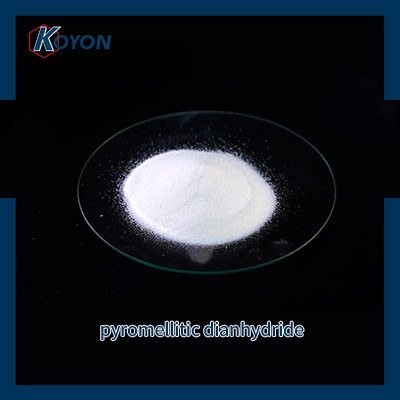
Our Pyromellitic Dianhydride is another great option. It's commonly used in the synthesis of high-performance polymers, which can exhibit excellent piezoelectric behavior. These polymers are often used in advanced applications where high precision and reliability are required.
And our Maleic Anhydride is also a valuable ingredient. It can be used to modify polymers and improve their piezoelectric properties. It's a cost-effective option that can be used in a wide range of applications.
Why Choose Our Anhydrides?
There are several reasons why you should choose our anhydrides for your piezoelectric applications. First of all, we have a strict quality control system in place. We ensure that all our products meet the highest standards of quality and purity. This means that you can trust our anhydrides to perform consistently and reliably.
Secondly, we have a team of experienced scientists and engineers who can provide technical support. If you have any questions or need help with your piezoelectric projects, we're here to assist you. We can offer advice on material selection, processing techniques, and application development.
Finally, we offer competitive pricing. We understand that cost is an important factor in any project, and we strive to provide high-quality products at a reasonable price. This makes our anhydrides a cost-effective solution for your piezoelectric needs.

Contact Us for Your Anhydride Needs
If you're interested in using our anhydrides for your piezoelectric applications, we'd love to hear from you. Whether you're a researcher, an engineer, or a manufacturer, we can provide you with the right anhydrides and support to help you achieve your goals.
Just reach out to us, and we'll be happy to discuss your requirements and provide you with a quote. Let's work together to explore the exciting world of piezoelectric anhydrides and create innovative solutions for the future.
References
- "Piezoelectricity: Fundamentals and Applications" by G. A. Smits
- "Polymer Piezoelectric Materials" by J. F. Nye
- "Advances in Anhydride Chemistry" by R. A. Sheldon