

When it comes to the synthesis of anhydrides, it's a fascinating yet complex area of chemistry. As a leading anhydrides supplier, I've witnessed firsthand the intricacies involved in the production process. In this blog, I'll delve into the side - reactions that can occur during the synthesis of anhydrides, which is crucial knowledge for both chemists and those interested in purchasing high - quality anhydrides.
General Synthesis of Anhydrides and Potential Side - Reactions
Anhydrides are typically synthesized through the reaction of carboxylic acids or their derivatives. One common method is the dehydration of carboxylic acids. For example, when two carboxylic acid molecules react in the presence of a dehydrating agent, an anhydride and water are formed. However, this seemingly straightforward reaction can be fraught with side - reactions.
One of the most prevalent side - reactions is hydrolysis. Since water is a product of the anhydride synthesis reaction, if the reaction conditions are not carefully controlled, the newly formed anhydride can react with the water present in the system. Anhydrides are highly reactive towards water, and hydrolysis can lead to the formation of carboxylic acids again. This not only reduces the yield of the desired anhydride but also complicates the purification process.
Another side - reaction is the formation of oligomers or polymers. In some cases, the reactive anhydride groups can react with each other or with other functional groups present in the reaction mixture. For instance, if there are hydroxyl groups in the system, the anhydride can react with them to form ester linkages. This can result in the formation of long - chain polymers or oligomers, which are often unwanted by - products. These by - products can have different physical and chemical properties compared to the desired anhydride, making it difficult to separate them.
Side - Reactions in Specific Anhydride Syntheses
Phthalic Anhydride
Phthalic Anhydride is widely used in the production of plasticizers, polyester resins, and dyes. It is commonly synthesized by the catalytic oxidation of o - xylene or naphthalene. During this process, several side - reactions can occur.
One of the main side - reactions is the over - oxidation of the starting materials. If the oxidation conditions are too harsh, o - xylene or naphthalene can be oxidized beyond the formation of phthalic anhydride. This can lead to the formation of carbon dioxide and water, reducing the overall yield of phthalic anhydride. Additionally, partial oxidation products such as phthalide or benzoic acid can also be formed. These by - products are difficult to separate from phthalic anhydride and can affect its quality.
Another side - reaction is the formation of colored impurities. During the oxidation process, some side - reactions can lead to the formation of conjugated compounds that absorb light in the visible region, resulting in a colored product. These colored impurities can be a significant problem, especially in applications where the purity and color of the phthalic anhydride are critical, such as in the production of high - quality polyester resins.
Pyromellitic Dianhydride
Pyromellitic Dianhydride is an important monomer for the synthesis of high - performance polyimides. It is usually synthesized by the oxidation of durene. Similar to the synthesis of phthalic anhydride, over - oxidation is a major concern. Durene can be completely oxidized to carbon dioxide and water if the reaction conditions are not carefully controlled.
In addition, side - reactions can occur at the intermediate stages of the oxidation process. For example, the formation of partially oxidized intermediates can lead to the formation of isomers or other unwanted by - products. These by - products can have different reactivities compared to pyromellitic dianhydride, which can affect the properties of the final polyimide products. The presence of these impurities can also cause problems during the purification process, as they may have similar physical properties to pyromellitic dianhydride.
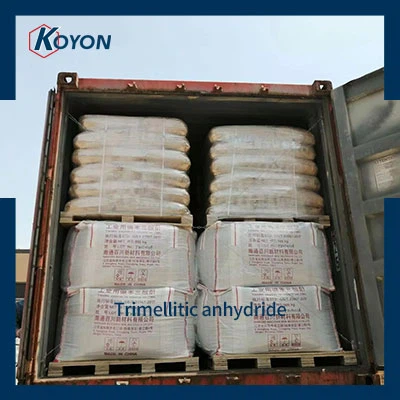
Trimellitic Anhydride
Trimellitic Anhydride is used in the production of plasticizers, coatings, and adhesives. It is typically synthesized by the oxidation of pseudocumene. Side - reactions in this synthesis are also related to over - oxidation and the formation of unwanted by - products.
Over - oxidation can lead to the formation of carbon dioxide and water, reducing the yield of trimellitic anhydride. Moreover, the oxidation process can result in the formation of isomers or other oxygenated compounds. These by - products can have different melting points, boiling points, and solubilities compared to trimellitic anhydride, making it challenging to purify the final product.
Impact of Side - Reactions on Product Quality and Yield
The side - reactions in the synthesis of anhydrides have a significant impact on both product quality and yield. As mentioned earlier, the formation of by - products such as carboxylic acids, oligomers, and polymers can reduce the purity of the anhydride. Impurities can affect the physical and chemical properties of the anhydride, such as its melting point, boiling point, and reactivity. In applications where high - purity anhydrides are required, such as in the production of electronic materials or high - performance polymers, even small amounts of impurities can have a detrimental effect on the final product performance.
The yield of the anhydride is also affected by side - reactions. The formation of unwanted by - products means that a portion of the starting materials is consumed in reactions other than the desired anhydride formation. This not only increases the cost of production but also requires more resources for the purification process. In some cases, the purification process can be so complex and costly that it may even make the production of the anhydride economically unviable.

Strategies to Minimize Side - Reactions
To minimize side - reactions in the synthesis of anhydrides, several strategies can be employed. One of the most important strategies is to carefully control the reaction conditions. This includes controlling the temperature, pressure, reaction time, and the concentration of reactants and catalysts. For example, in the oxidation reactions of phthalic anhydride, pyromellitic dianhydride, and trimellitic anhydride, the temperature and the amount of oxygen need to be precisely controlled to avoid over - oxidation.
Another strategy is to use high - quality starting materials. Impurities in the starting materials can participate in side - reactions, leading to the formation of unwanted by - products. By using pure starting materials, the number of potential side - reactions can be reduced.
Purification techniques also play a crucial role in minimizing the impact of side - reactions. Various purification methods such as distillation, crystallization, and chromatography can be used to separate the desired anhydride from the by - products. For example, distillation can be used to separate anhydrides with different boiling points, while crystallization can be used to purify anhydrides based on their solubility differences.
Conclusion
In conclusion, the synthesis of anhydrides is a complex process that is often accompanied by various side - reactions. These side - reactions can have a significant impact on the quality and yield of the anhydrides. As an anhydrides supplier, we are well - aware of these challenges and have developed advanced production and purification techniques to minimize the side - reactions and ensure the high quality of our products.
If you are in the market for high - quality anhydrides, whether it's Phthalic Anhydride, Pyromellitic Dianhydride, or Trimellitic Anhydride, we invite you to contact us for a detailed discussion about your requirements. Our team of experts is ready to assist you in finding the best anhydride solutions for your specific applications.
References
- Smith, J. K. (2015). Organic Chemistry of Anhydrides. Wiley - VCH.
- Jones, A. R., & Brown, B. L. (2018). Catalytic Oxidation Reactions for Anhydride Synthesis. Chemical Reviews, 118(5), 2345 - 2378.
- Lee, C. M., & Kim, D. S. (2020). Purification Techniques for Anhydrides. Journal of Separation Science, 43(10), 1890 - 1905.